Rules of etiquette
If you’re sending a professional email, make sure to use your business email account and a professional tone. Most companies will assign you an email address with their name on it, but if they don’t, you can always create a separate email address strictly for business https://online-las-atlantis.com/. This makes you look legitimate and professional and reduces the likelihood of embarrassing email mistakes. If you want to stick to one email account, at least sort work emails into a separate folder. While we’re on the topic, here’s how the most productive people manage their emails.
Some email programs use a queue to hold emails before sending them, and occasionally messages will get left in the queue and not sent. However, “it got stuck in my outbox” is not a good excuse and is simply bad manners, says Olivier. Make it a habit to ensure all your messages are sent.
Email is how many businesses communicate. It’s fast, easy, and accessible. Plus, email is permanent. If you forgot what you were asked, simply find the last email thread for the answer. Email is also effective at disseminating information among team members. However, there is no way to unsend an email.
Bcc stands for blind carbon copy. With bcc, you can send an email to a large group of people without showing the individual recipients’ email addresses. This way, none of the recipients can see who else received the email. They also can’t email each other through reply-all, which makes bcc a handy tool for avoiding cluttered inboxes.
Solid communication skills help you thrive in your professional growth. Writing with respect, clarity, and efficiency builds better connections across your team and avoids miscommunications that are both counterproductive and reflect poorly on you and your organization.
10 golden rules of email etiquette
Always include a straightforward subject line that will clearly indicate to the receiver what the email entails. For example, if you’re sending a proposal to someone, be specific and write, “The Acme Proposal is attached.”
In professional emails, it’s generally best to avoid using emojis. While we commonly use emojis in casual communication with friends and family, it can sometimes come across as too informal for professional settings. So it’s always best to keep the email thread professional and diplomatic.
Email etiquette matters because it sets the tone for how we communicate professionally. When we write clear and respectful emails, it shows we value the recipient’s time and understanding. This not only reduces confusion but also strengthens working relationships. By following etiquette guidelines, we create a positive environment where everyone feels respected and communication flows smoothly.

Always include a straightforward subject line that will clearly indicate to the receiver what the email entails. For example, if you’re sending a proposal to someone, be specific and write, “The Acme Proposal is attached.”
In professional emails, it’s generally best to avoid using emojis. While we commonly use emojis in casual communication with friends and family, it can sometimes come across as too informal for professional settings. So it’s always best to keep the email thread professional and diplomatic.
10 rules of golf etiquette
Standing behind another player preparing to hit can be distracting. It’s important to stand to the side to give the player a clear view and focus. This helps maintain concentration and respects their shot. Always stay out of the player’s line of sight.
This ensures a quality experience for everyone. The third rule emphasizes pace of play. Golfers should be ready to hit when it’s their turn, keeping the game moving efficiently for all players. Fourth, always respect the tee time schedule to avoid delays.
If you make a divot (creating a crater in the ground with your club), either replace it or fill it with provided sand. Different courses have different rules depending on the type of turf (replace or fill). Also, if you make a pitch mark on the green with your approach shot, be sure to repair it with a tee or ball mark repair tool.
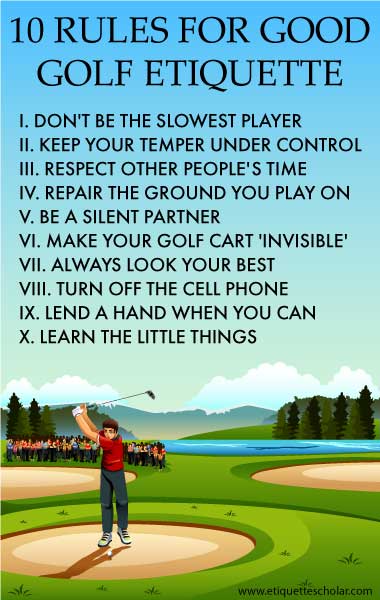
Standing behind another player preparing to hit can be distracting. It’s important to stand to the side to give the player a clear view and focus. This helps maintain concentration and respects their shot. Always stay out of the player’s line of sight.
This ensures a quality experience for everyone. The third rule emphasizes pace of play. Golfers should be ready to hit when it’s their turn, keeping the game moving efficiently for all players. Fourth, always respect the tee time schedule to avoid delays.
If you make a divot (creating a crater in the ground with your club), either replace it or fill it with provided sand. Different courses have different rules depending on the type of turf (replace or fill). Also, if you make a pitch mark on the green with your approach shot, be sure to repair it with a tee or ball mark repair tool.
